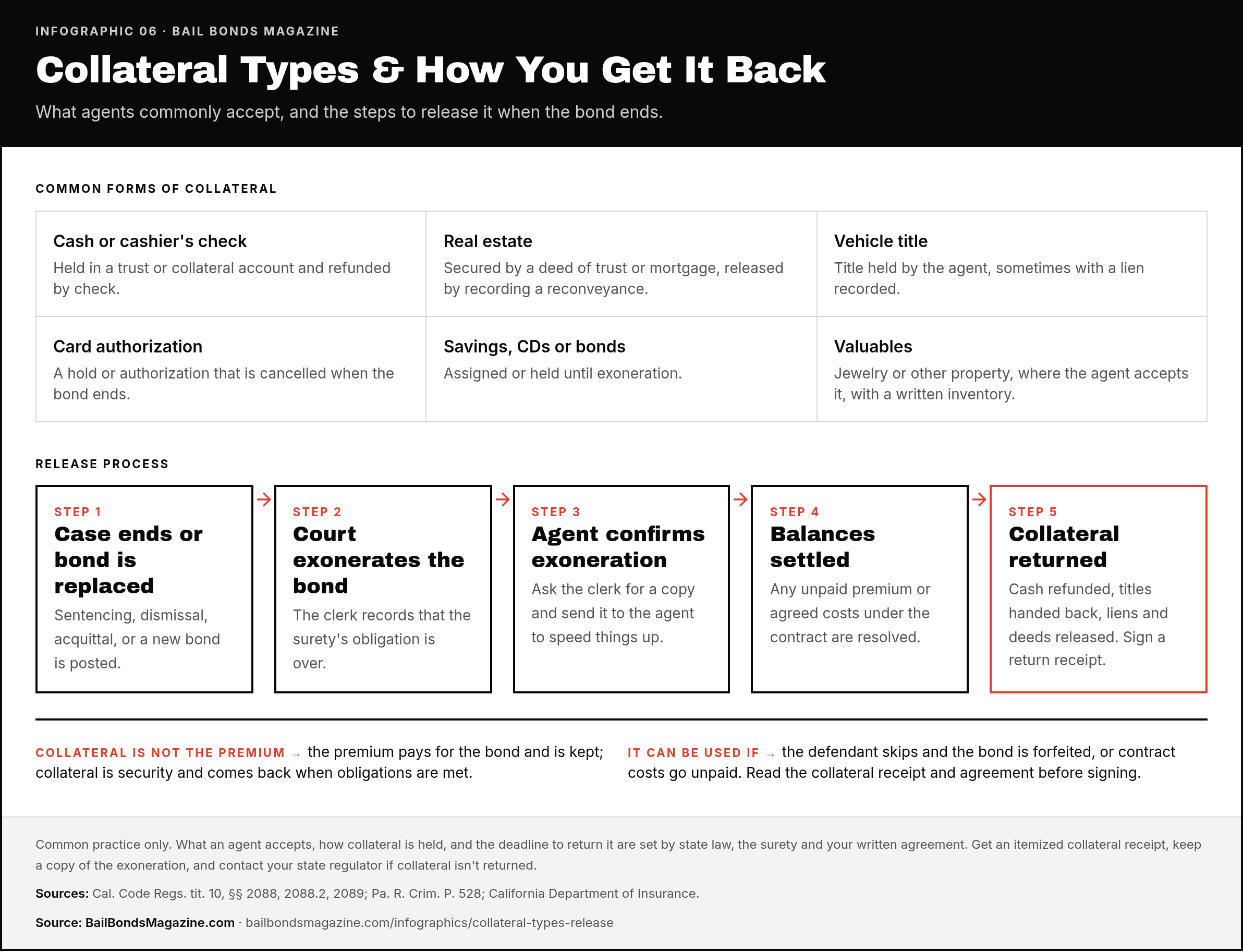
Understanding this infographic
Collateral is held in trust
In California, a bail licensee who receives collateral holds it in a fiduciary capacity and must keep it separate from its own funds before any forfeiture (Cal. Code Regs. tit. 10, § 2088). Courts in some states also accept real estate directly as security for bail, as Pennsylvania's rules allow (Pa. R. Crim. P. 528(D)).
When it must come back
California requires collateral to be returned as soon as the bail licensee learns the obligation is discharged, and immediately after an order ends liability under the bond (§ 2088.2). If the bond is forfeited and collateral exceeds the amount owed, the excess must be returned (§ 2089). Unpaid premium or agreed charges can be collected from collateral other than cash after demand.
Speeding up the return
Ask the court clerk for proof of exoneration, send it to the agent, and request a written receipt when collateral is returned. If collateral isn't returned, contact your state insurance department or bail regulator.
Sources
- Cal. Code Regs. tit. 10, § 2088 — collateral held in a fiduciary capacity
- Cal. Code Regs. tit. 10, § 2088.2 — return of collateral
- Cal. Code Regs. tit. 10, § 2089 — return of excess collateral on forfeiture
- Pa. R. Crim. P. 528 — monetary bail, 10% deposit and accepted security
- California Department of Insurance — Bail Bonds (laws, schedules, forfeitures)