Understanding this infographic
The trend
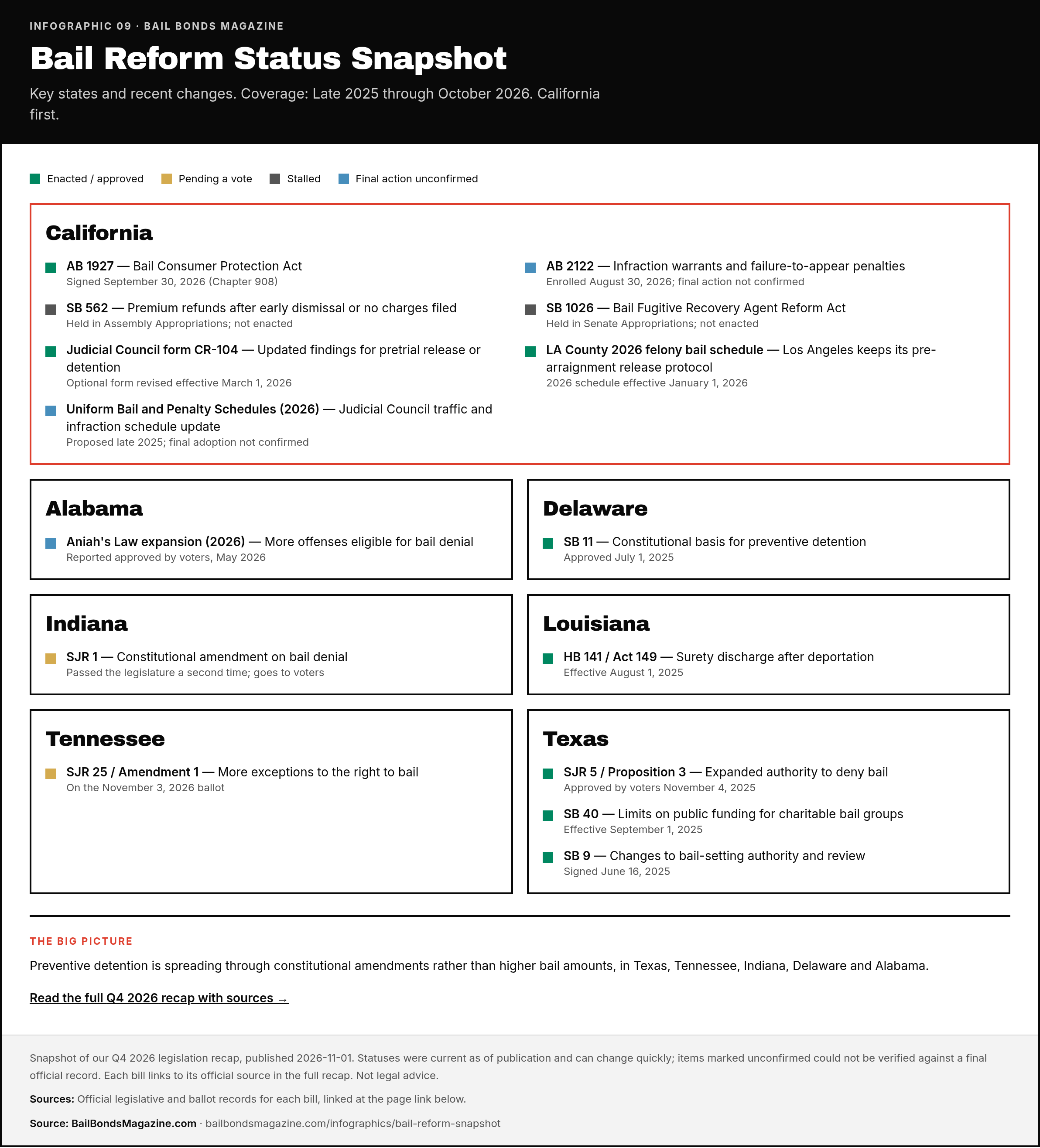
Recent changes have focused less on bail amounts and more on when courts may deny bail entirely, through constitutional amendments in several states, alongside consumer-protection measures for the bail industry in California.
How we classify status
“Enacted” means signed, approved by voters or in effect. “Pending” means awaiting a vote. “Stalled” means held in committee or not enacted. “Unconfirmed” means we could not verify final action in an official record at publication. Each bill links to its official source.
Sources
Official source for each bill (15)
- California: AB 1927 — Bail Consumer Protection Act
- California: SB 562 — Premium refunds after early dismissal or no charges filed
- California: SB 1026 — Bail Fugitive Recovery Agent Reform Act
- California: AB 2122 — Infraction warrants and failure-to-appear penalties
- California: Judicial Council form CR-104 — Updated findings for pretrial release or detention
- California: LA County 2026 felony bail schedule — Los Angeles keeps its pre-arraignment release protocol
- California: Uniform Bail and Penalty Schedules (2026) — Judicial Council traffic and infraction schedule update
- Texas: SJR 5 / Proposition 3 — Expanded authority to deny bail
- Texas: SB 9 — Changes to bail-setting authority and review
- Texas: SB 40 — Limits on public funding for charitable bail groups
- Tennessee: SJR 25 / Amendment 1 — More exceptions to the right to bail
- Indiana: SJR 1 — Constitutional amendment on bail denial
- Delaware: SB 11 — Constitutional basis for preventive detention
- Louisiana: HB 141 / Act 149 — Surety discharge after deportation
- Alabama: Aniah's Law expansion (2026) — More offenses eligible for bail denial