Understanding this infographic
How bail gets set
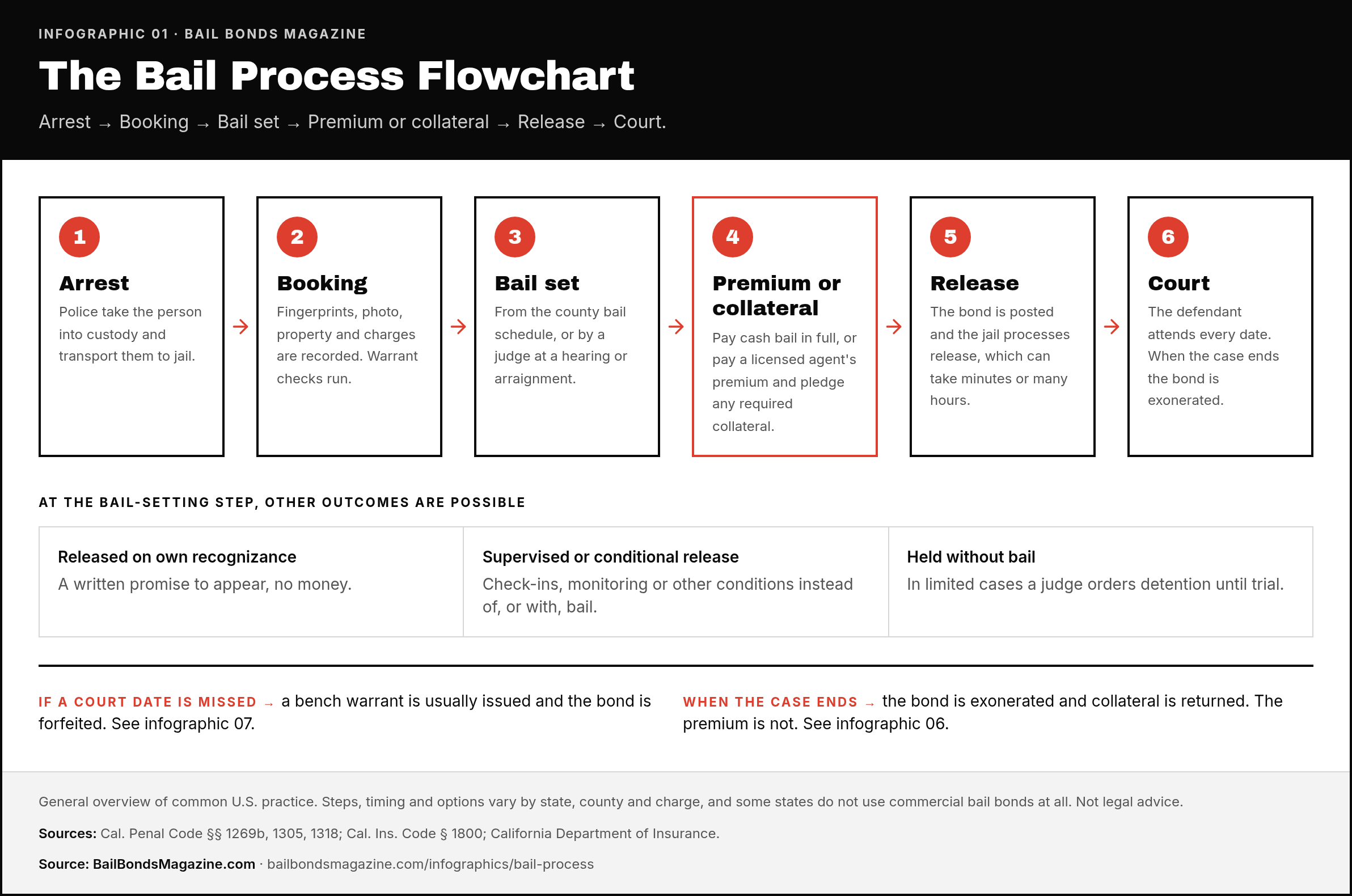
In California, the judges in each county adopt a countywide bail schedule, and the jail can accept bail in the scheduled amount before a defendant ever sees a judge (Penal Code § 1269b). At a hearing or arraignment, a judge can raise, lower or replace that amount, or release the person on their own recognizance after they sign a written promise to appear (§ 1318). Other states use similar schedules or hold a first-appearance hearing instead.
Paying, posting and release
Once bail is set, the family can pay the full amount to the court, or hire a licensed bail agent who charges a premium and files a surety bond backed by an insurance company. In California only licensed bail agents may solicit or write bail (Insurance Code § 1800). After the bond is posted, release can take from under an hour to most of a day depending on the jail.
Why court dates matter
The bond is a promise that the defendant will attend every court date. When the case ends, the court exonerates the bond: any collateral comes back, while the premium is the agent's fee and is not refunded. If a date is missed, the forfeiture process begins — see the missed-court and forfeiture timeline infographics.
Sources
- Cal. Penal Code § 1269b — posting bail and countywide bail schedules
- Cal. Penal Code § 1318 — own-recognizance release agreement
- Cal. Insurance Code § 1800 — bail license required
- Cal. Penal Code § 1305 — forfeiture, notice and the 180-day period
- California Department of Insurance — Bail Bonds (laws, schedules, forfeitures)