Understanding this infographic
What the categories mean
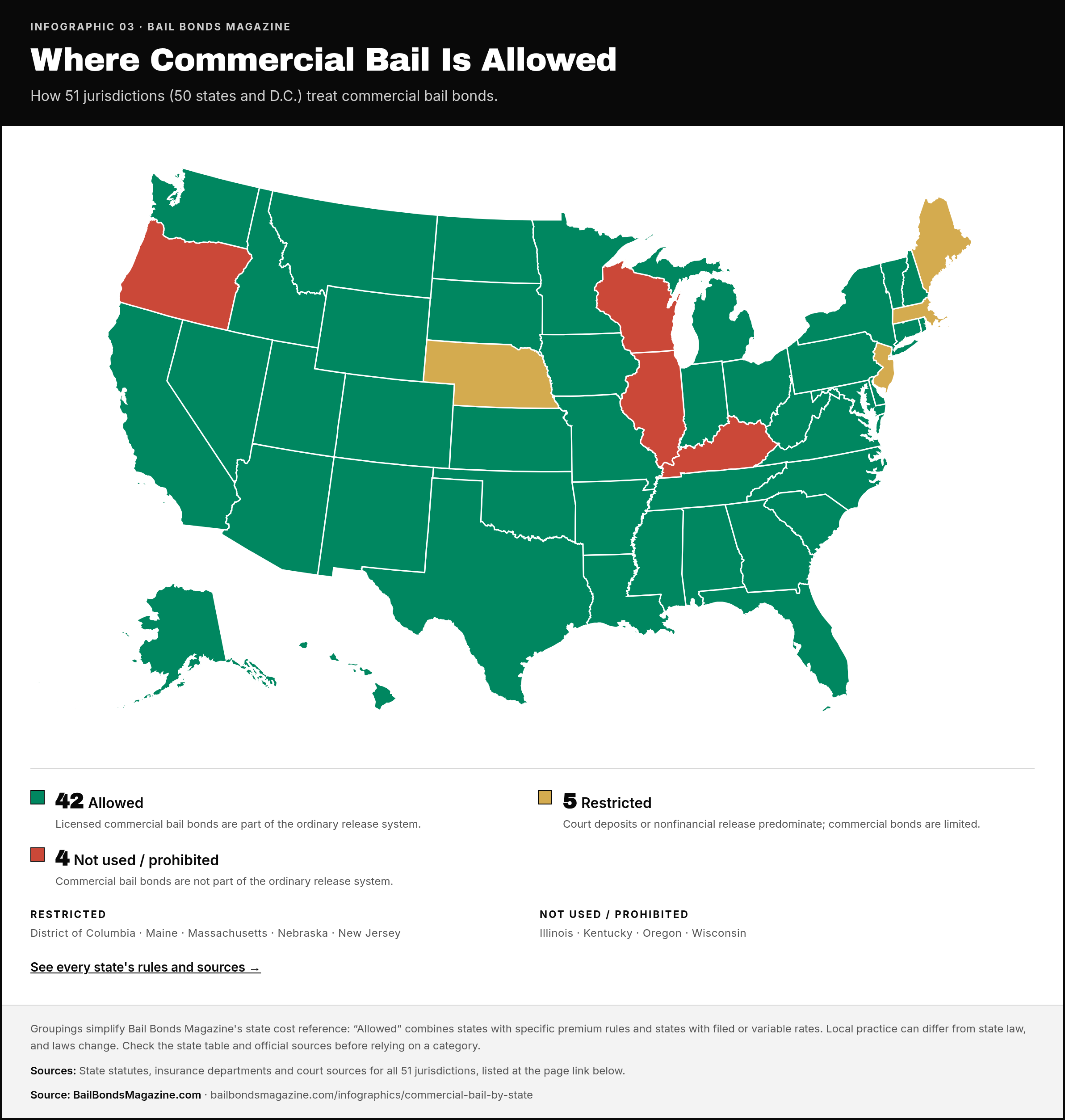
“Allowed” means licensed bail agents and sureties write bonds as part of the ordinary release system, whether premium rates are fixed by statute or filed with a regulator. “Restricted” means court deposits or nonfinancial release dominate and commercial bonds play a limited role. “Not used” means commercial bail is not part of the ordinary system, by statute or practice.
Why it matters
In states without commercial bail, families typically post a deposit directly with the court or are released on conditions. Where bonds are allowed, the state insurance department or another regulator licenses agents and approves rates. Local practice can still differ from statewide law, so check the court where the case is filed.
Sources
Classification source for each state (51)
- Alabama: Department of Insurance — Surety insurance
- Alaska: Alaska Administrative Code — 3 AAC 23.760
- Arizona: A.R.S. § 20-340.01 — Bail bond agents
- Arkansas: Arkansas — Bail Bond Statutes, § 17-19-301
- California: California Department of Insurance — Bail Bonds
- Colorado: Colorado Revised Statutes — Title 10, § 10-2-707
- Connecticut: Connecticut General Statutes — § 38a-660b
- Delaware: Delaware Code — Bail Bond Agents
- District of Columbia: District of Columbia Code — § 23-1101
- Florida: Florida DFS — Bail Bond Rate Filing
- Georgia: Georgia — 2024 SB 63, signed legislation
- Hawaii: Hawaii Revised Statutes — § 804-62
- Idaho: Idaho Department of Insurance — Bail Bonds
- Illinois: Illinois Courts — End of cash bail
- Indiana: Indiana Department of Insurance — Bail Agent Licensing
- Iowa: Iowa Code — § 811.2
- Kansas: Kansas Statutes — § 22-2809b
- Kentucky: Kentucky Revised Statutes — § 431.510
- Louisiana: Louisiana Revised Statutes — R.S. 22:1443
- Maine: Maine Revised Statutes — 4 M.R.S. § 1054
- Maryland: Maryland COMAR — 31.03.05.07, Rates
- Massachusetts: Massachusetts Court Rules — Bail Rule 43
- Michigan: Michigan Compiled Laws — § 750.167b
- Minnesota: Minnesota Statutes — § 60M.02, Premiums
- Mississippi: Mississippi Insurance Department — Code access, § 83-39-25
- Missouri: Missouri Department of Insurance — Bail Bond FAQs
- Montana: Montana CSI — Bail premium statement
- Nebraska: Nebraska Revised Statutes — § 29-901
- Nevada: Nevada Revised Statutes — Chapter 697
- New Hampshire: New Hampshire RSA — 597:7-b
- New Jersey: New Jersey Courts — Criminal Justice Reform
- New Mexico: New Mexico Administrative Code — 13.20.2
- New York: New York Insurance Law — § 6804
- North Carolina: North Carolina General Statutes — § 58-71-95
- North Dakota: North Dakota Insurance Department — Bail Bond
- Ohio: Ohio Revised Code — § 3905.93
- Oklahoma: Oklahoma Insurance Department — Bail Bond Statutes
- Oregon: Oregon Judicial Department — Security Release
- Pennsylvania: Pennsylvania Rules of Criminal Procedure — Rule 528
- Rhode Island: Rhode Island General Laws — § 12-13-10
- South Carolina: South Carolina Code — Title 38, Chapter 53
- South Dakota: South Dakota Codified Laws — Chapter 58-22
- Tennessee: Tennessee Courts — Code access, § 40-11-316
- Texas: Texas Department of Insurance — Bond Resources
- Utah: Utah Code — Title 31A, Chapter 35
- Vermont: Vermont Statutes — Bail and Recognizances
- Virginia: Code of Virginia — § 9.1-185.8
- Washington: Washington Legislature — Bail Practices Report
- West Virginia: West Virginia Code — § 51-10-8
- Wisconsin: Wisconsin Statutes — Chapter 969
- Wyoming: Wyoming Department of Insurance — Bail Bonds