Courts May Enter Bail Bond Forfeiture Judgments Directly in Criminal Cases, Fifth District Rules
Fifth District rules in People v. North River Insurance Co. that courts may enter bail forfeiture summary judgments in the criminal case, not a civil action.
By Bail Bonds Magazine Staff
Nov 1, 2026 · 4 min read
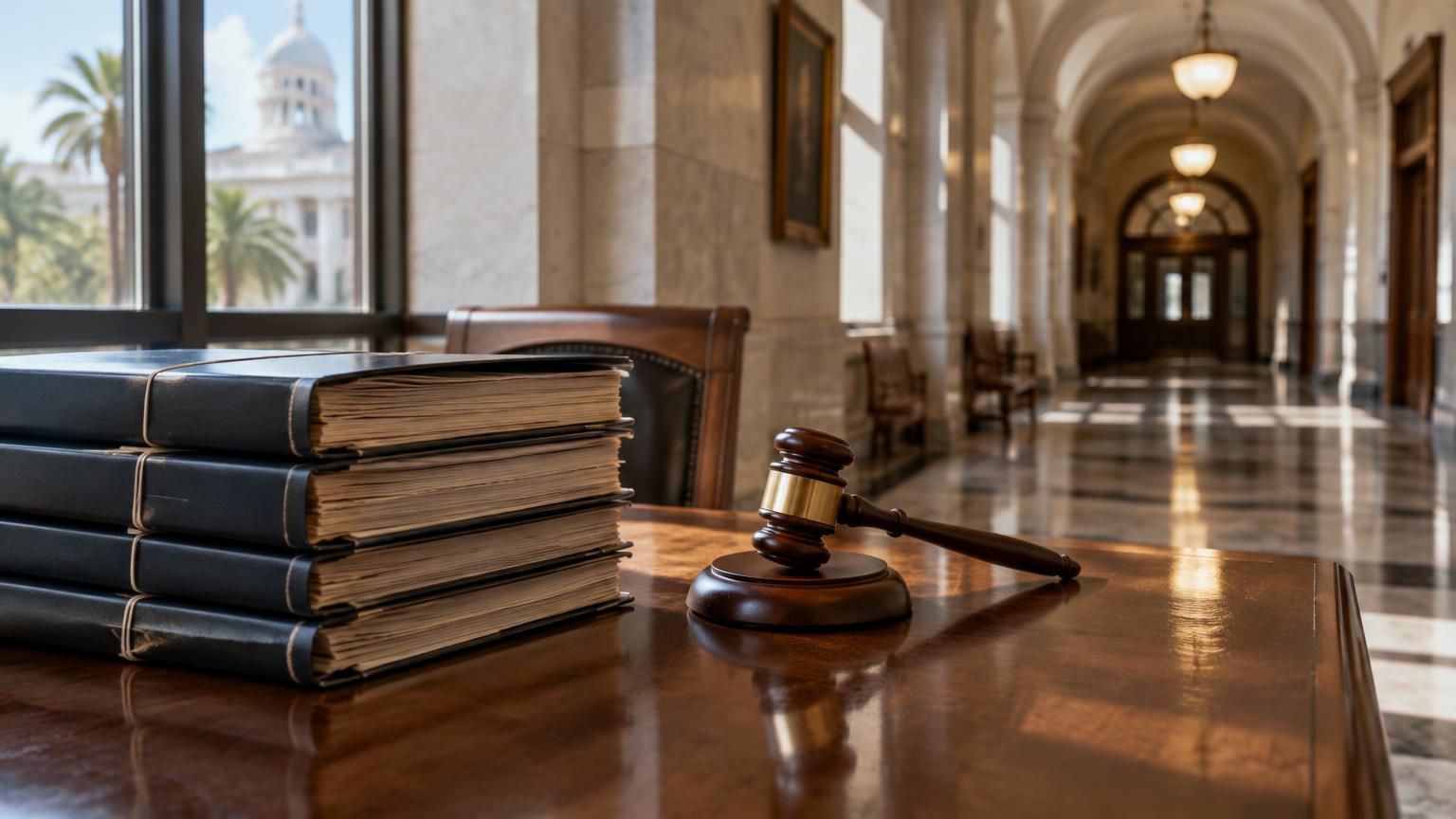
A published California Court of Appeal decision has closed a previously untested procedural argument available to sureties, confirming that trial courts may enter summary judgment on forfeited bail bonds directly in the underlying criminal case without opening a separate civil action.
The Case
In a decision filed October 9, 2026, and certified for publication, the Fifth District Court of Appeal affirmed a $90,000 forfeiture judgment in People v. The North River Insurance Co. entered against The North River Insurance Company. Bad Boys Bail Bonds, acting as North River’s agent, had posted the bond in January 2024 in Stanislaus County for a defendant charged with felony firearm offenses. The defendant failed to appear at arraignment roughly two months later. After the statutory 180-day appearance period and a court-granted extension expired in April 2025 without a surrender, the clerk entered summary judgment for the full bond amount plus administrative costs and interest—directly in the criminal case.
The Surety’s Argument
North River moved to set aside the judgment, arguing that Penal Code section 1306, which governs entry of summary judgment on a forfeited bond, implicitly requires a separate civil filing. The statute lists five express requirements for the judgment but is silent on whether it must be entered in a civil or criminal proceeding. The surety contended that this silence meant a new civil case was required. The trial court denied the motion, noting that no bail agent or surety had previously raised the argument in that court.
The Fifth District’s Reasoning
On appeal, the Fifth District rejected the claim. The court held that if the Legislature had intended to require a separate civil action, it would have said so. Section 1306 neither mandates nor prohibits entry of the judgment in the criminal case. The principle that the express enumeration of specific requirements implies the exclusion of others, the court reasoned, cut against the surety rather than in its favor. Both practices that had developed across California trial courts—opening a new civil case or entering judgment in the existing criminal matter—are permissible. The choice remains with the trial court.
Binding Statewide
Because the opinion is published, it is binding statewide. Sureties and agents seeking to challenge forfeiture judgments on the ground that the judgment must be entered in a separate civil action will find that avenue closed. The appeal addressed only the procedural question of where the judgment may be entered; the underlying validity of the forfeiture was not at issue.
Implications for the Industry
The ruling removes one procedural uncertainty that had existed in practice. For years, counties and individual courts handled the entry of bail-bond summary judgments inconsistently. Some opened new civil files; others entered judgment in the criminal case. Both approaches are now confirmed as lawful. Agents and sureties operating across multiple counties should expect continued local variation in procedure, but they can no longer treat entry in the criminal case as a jurisdictional defect.
The decision also underscores the narrow window for challenging forfeitures on purely procedural grounds once the statutory appearance period and any extensions have expired. While sureties retain the statutory defenses set out in Penal Code section 1305 and related provisions (such as timely surrender — see our guide to early surrender and exoneration options, sufficient excuse for nonappearance, or certain government actions that materially increase risk), arguments that the form of the judgment itself is defective because it was entered in the criminal case are no longer available under published precedent.
In a broader compliance environment already shaped by consumer-protection rulings on cosigner notices and ongoing antitrust scrutiny of premium practices, the case is a reminder that forfeiture litigation turns heavily on precise adherence to the bail statutes’ timing and notice requirements. Procedural creativity after the fact faces a high bar once an appellate court has addressed the issue in a published opinion.
What Agents and Sureties Should Do Now
Sureties and agents should continue to monitor court practice in the counties where they write bonds and maintain clear internal protocols (our compliance playbook is a starting point) for tracking appearance periods, extensions, and the subsequent entry of judgment—whether that occurs in the criminal file or a companion civil action. The Fifth District’s decision settles one open question; it does not alter the underlying obligation to produce the defendant or the statutory pathways for relief when that obligation is not met.
For definitions of forfeiture, exoneration and related terms, see the Bail Bonds Glossary.
Case and statute references
- People v. The North River Insurance Co. (Cal. Ct. App. Oct. 9, 2026) F090562 (certified for publication)
- California Penal Code section 1305 (forfeiture, appearance period and relief)
- California Penal Code section 1306 (summary judgment on forfeited bond)
- California Code of Civil Procedure section 1858 (construction of statutes)
The opinion opens on the Judicial Branch of California website; statutes open on the California Legislature’s official site. This article is general information, not legal advice; consult counsel about a specific forfeiture.
Get the Weekly Brief
More in this section

Cosigner Notice Failures: The $38 Million Bad Boys Settlement and the $4.5 Million Bail Hotline Deal
How Civil Code 1799.91 cosigner-notice failures led to the $38M Bad Boys and $4.5M Bail Hotline bail settlements, plus a compliance checklist for agents.
Bail Bonds Magazine Staff · Nov 1, 2026 · 9 min
The Antitrust Settlements: Is the “Standard 10%” Bail Premium Under Pressure?
What the California bail bond antitrust settlements require, how Prop 103 rebating works and what negotiable premiums may mean for agents and agencies.
Bail Bonds Magazine Staff · Nov 1, 2026 · 6 min
Public Safety, Fairness and Commercial Bail After Kowalczyk
Does Kowalczyk weaken public safety? A balanced look at detention rules, prosecutors’ concerns, fairness, the evidence and where commercial bail fits.
Bail Bonds Magazine Staff · Nov 1, 2026 · 7 min