The Bounty Hunter’s Guide to Bulletproof Vests / Ballistic Protection
Ballistic protection is a workplace safety decision, not a promise of invulnerability. This guide explains how bail recovery professionals can evaluate armor ratings, fit, condition, documentation and legal responsibilities without confusing protective equipment with authority or permission to take greater risks.
By Bail Bonds Magazine Staff
Oct 19, 2026 · 6 min read
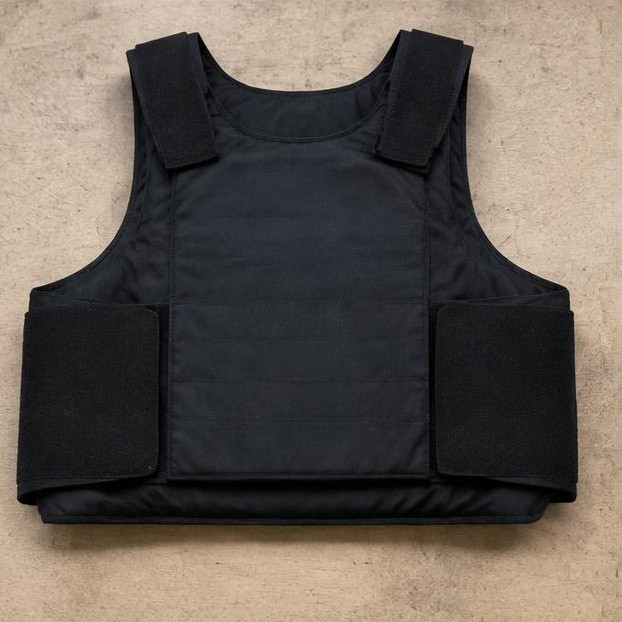
A ballistic vest can reduce certain injury risks, but it cannot make an uncertain recovery assignment safe. For bail recovery professionals, the useful question is not simply which vest to buy. It is whether a documented protective-equipment program matches the work, the wearer and the limits of lawful authority. That program includes selecting verified armor, checking fit, maintaining equipment and knowing when to stop an assignment rather than rely on protection. The phrase “bulletproof vest” is familiar, but misleading: no vest protects against every projectile, every impact location or every injury. A sound purchase starts with that limitation and treats armor as one part of a broader safety system—not as permission to approach a situation that should instead be deferred or referred to law enforcement.
Start With Authority and Assignment Limits
Protective equipment does not confer police powers. Before discussing armor, an agency should establish who is legally authorized to perform recovery work, where that authority applies and what documentation is required. A license or authorization in one state does not automatically authorize work in another. Armor possession and use can also be subject to legal restrictions, so procurement should include a review of applicable law rather than an assumption that retail availability settles the issue.
California requires bail fugitive recovery licensure; a training certificate alone is insufficient. Its framework also includes conditional recovery authority, written authorization, identification and local law-enforcement notification requirements. Agencies should consult the California Department of Insurance’s current requirements at https://www.insurance.ca.gov/0200-industry/0050-renew-license/0200-requirements/Bail-Fugitive-Recovery-Agent.cfm and obtain professional legal guidance when an assignment crosses jurisdictions or presents uncertain authority.
A vest belongs downstream of those checks. It cannot cure an invalid authorization, justify coercion or turn a private recovery assignment into a police operation. Supervisors should make clear that declining or pausing work for safety or legal reasons is an acceptable operational decision. Otherwise, an equipment purchase can quietly create pressure to accept risks the organization has not actually controlled.
Understand What an Armor Rating Establishes
Ballistic ratings describe performance against specified test threats under defined conditions. They do not mean that armor will stop every round commonly described as a handgun or rifle round. Projectile construction, velocity, impact location and armor condition matter. Even when a projectile does not penetrate, the wearer may sustain serious injury from the impact. Uncovered areas remain exposed.
The National Institute of Justice provides information about body armor standards and its compliance-testing program at https://nij.ojp.gov/topics/equipment-and-technology/body-armor. Buyers should verify the exact model and applicable standard through official program information, rather than rely solely on a seller’s statement that a product is “NIJ tested.” Testing language, a laboratory report and inclusion on an official compliant-products list are not interchangeable claims.
Armor labels may reference different generations of NIJ standards, with different protection-level terminology. Compare the actual standard, model and listed protection—not just a familiar level designation. Ask the supplier to explain any ambiguous claim in writing.
Ballistic resistance is also different from stab or spike resistance. A ballistic vest should not be assumed to provide certified protection against edged or pointed weapons. Where both hazards are relevant, evaluate the documented protection for each separately.
Select the Complete System, Not Just a Plate
Soft armor and hard armor serve different purposes, with different coverage, weight and mobility tradeoffs. Soft armor commonly addresses specified handgun threats; hard armor can address specified rifle threats, depending on its rating. Neither category is universally appropriate. Buying the heaviest available configuration without considering whether personnel can wear it correctly throughout an assignment is not a complete safety decision.
A carrier is not necessarily armor. Some carriers hold ballistic panels or plates but provide no ballistic protection by themselves. The protective components must be compatible with the carrier and used in the configuration the manufacturer specifies. Certain plates require designated supporting armor to achieve their rated performance; others are rated for stand-alone use. Mixing components without confirming compatibility can invalidate the assumptions behind the purchase.
For a hypothetical example, an agency orders carriers and discounted plates from separate suppliers. The purchase looks complete until a document review shows that the plates require supporting soft armor that was never ordered. The lesson is not that separate purchases are inherently wrong. It is that someone must verify the entire assembly before issue.
Request model identification, sizing instructions, care guidance, warranty terms and supporting compliance documentation. Evaluate traceability and supplier support alongside price, particularly when considering used equipment with an uncertain history.
Fit Armor to the Person and the Work
Fit affects coverage, comfort and whether armor stays in its intended position. A vest that fits while standing may shift, pinch or interfere with a seat belt when seated. Oversized armor is not automatically safer, and overly small armor can leave avoidable gaps. Fitting should follow the manufacturer’s instructions and account for body shape rather than assuming one standard cut works for every employee.
A qualified fitting process should include ordinary work movements in a controlled setting: sitting, walking, bending and using required communications equipment. Check compatibility with clothing and other authorized equipment without modifying ballistic panels. Avoid homemade alterations, additional stitching through protective materials or changes the manufacturer has not approved.
Heat, fatigue and prolonged wear deserve equal attention. A configuration that personnel routinely remove because it is intolerable is not delivering the protection anticipated in the purchasing plan. Supervisors should address suitable scheduling, rest, hydration and any individual medical concerns through appropriate occupational-health advice.
Recheck fit when body size, assigned equipment or job duties change. Record the issued configuration so replacement parts do not quietly change the system. Comfortable armor is not necessarily adequate armor, but usable, correctly fitted protection is essential to consistent wear.
Inspect, Store and Retire Armor Deliberately
Armor maintenance should follow the instructions for the specific product. Cleaning a fabric carrier is not the same as cleaning a ballistic panel. Unapproved washing, chemicals, heat or storage practices can damage components. Do not assume instructions for one brand or material apply to another, and never treat a clean exterior as proof that the protective package is sound.
Establish checks for damaged covers, compromised closures, deformation, unusual wear and other conditions identified by the manufacturer. After a drop, significant impact or suspected damage, follow the manufacturer’s evaluation process rather than declaring equipment serviceable by appearance alone. Visual inspection cannot establish that every internal component remains intact.
Keep a practical equipment record: model, serial or lot information where available, issue date, assigned wearer, inspections, reported incidents and replacement decisions. Preserve labels and purchasing documentation. These records help resolve recalls, warranty questions and uncertainty about an item’s history.
Warranty periods and replacement guidance require careful reading. A warranty is not a guarantee that armor remains safe regardless of use or damage, and age alone does not describe its full condition. Remove questionable equipment from service pending qualified assessment. Armor struck by gunfire should not simply be returned to use because it appears to have stopped the projectile.
Make Protection Part of a Documented Safety Program
Equipment training should explain limitations, correct wear, inspection and reporting—not encourage confidence beyond what the product supports. Agencies should also establish lawful communication procedures, emergency contacts and a plan for obtaining medical assistance. A person hit while wearing armor needs urgent medical evaluation even if there is no obvious penetration. Completing the recovery assignment is not the priority after an injury.
Public-facing appearance matters as well. Protective clothing and identification should accurately reflect the wearer’s role and comply with applicable requirements. Avoid markings that imply law-enforcement status where none exists. A carrier’s appearance cannot substitute for required credentials, written authority or clear communication.
The practical takeaway is to separate three decisions: whether the work is lawful, whether it can be undertaken safely and which verified protective equipment is appropriate. Approval of one does not answer the others. Assign responsibility for procurement, fitting, inspection records and replacement, then give personnel a clear way to report concerns without pressure to continue. Ballistic protection is most useful when its limits are understood and the agency remains willing to stop work that equipment cannot make acceptable.
Get the Weekly Brief
More in this section

Skip Tracing Fundamentals: A Legal and Ethical Primer
Effective skip tracing starts with verified records, clear authority and disciplined information handling. This primer explains how bail professionals can evaluate leads, protect sensitive data and recognize when locating someone requires additional legal review rather than another database search.
Bail Bonds Magazine Staff · Oct 27, 2026 · 6 min

Recovery Powers Vary by State: What Bail Professionals Must Verify
A recovery assignment does not carry the same authority across state lines. Licensing, written authorization, notification, custody and transport requirements can change. Here is how bail professionals can evaluate an assignment without confusing a bond contract with nationwide enforcement power.
Bail Bonds Magazine Staff · Oct 24, 2026 · 6 min

Apps in the Modern Recovery Toolkit: Better Records, Clearer Authority
Recovery software should do more than organize names and addresses. A practical toolkit helps agencies verify authority, protect sensitive information, document decisions and coordinate lawful work—without mistaking a map pin, database match or automated reminder for permission to act.
Bail Bonds Magazine Staff · Oct 20, 2026 · 6 min